
Core stability is the ability of the deep muscles around your spine, pelvis, and trunk to support controlled, efficient movement. While many people associate a strong core with visible abdominal muscles, true core stability is about improving movement quality, balance, and spinal support in everyday activities.
Mat Pilates is an effective, low-impact way to strengthen these deep stabilising muscles without the need for specialised equipment. Whether you’re looking to improve your posture, reduce your risk of injury, or support your performance in daily life or sport, the right exercises can make a significant difference.
At Go Run Go Physio, we often incorporate Pilates-based movements into personalised home exercise programs to help our clients improve movement control, build confidence, and achieve long-term results.
Why Core Stability Matters More Than Having “Strong Abs”
Core stability is much more than building stronger abdominal muscles. It refers to the ability of your deep core muscles, including the transverse abdominis, pelvic floor, diaphragm, and multifidus, to work together to stabilise your spine and pelvis during movement.
A stable core helps you:
- Improve posture and spinal alignment
- Support your lower back during daily activities
- Enhance balance and coordination
- Improve movement efficiency
- Reduce the risk of injuries
- Perform everyday tasks and exercise with greater control
Rather than focusing on high repetitions or intense workouts, physiotherapists prioritise controlled movement and proper technique. Developing good movement patterns creates a stronger foundation for long-term physical health and function.
How Mat Pilates Helps Improve Core Stability
Unlike many traditional strengthening exercises, Mat Pilates focuses on precision, breathing, and controlled movement. Every exercise encourages you to activate your deep stabilising muscles while maintaining a neutral spine and proper alignment.
Regular Mat Pilates can help improve:
- Deep core muscle activation
- Pelvic stability
- Body awareness
- Postural control
- Muscle endurance
- Functional movement patterns
Because Mat Pilates uses your own body weight, it is suitable for many people and can easily be adapted to different fitness levels.
At Go Run Go Physio, our physiotherapists incorporate Pilates principles into personalised home exercise programs where appropriate, ensuring each exercise matches your individual needs, goals, and stage of rehabilitation.
5 Mat Pilates Exercises to Improve Core Stability
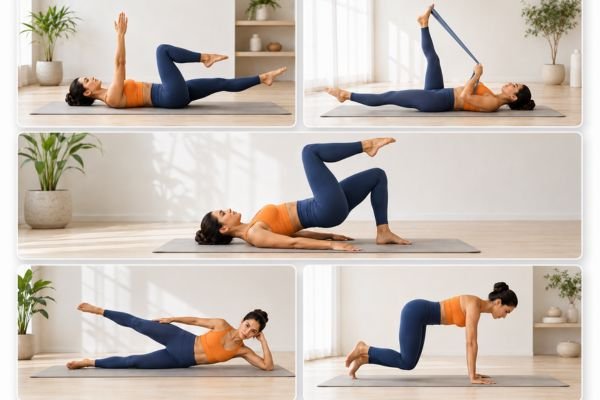
1. Dead Bug with Heel Hover
The Dead Bug with Heel Hover is an excellent exercise for developing deep core activation while maintaining a stable pelvis.
Lie on your back with your knees bent to 90 degrees and your arms reaching towards the ceiling. Slowly lower one heel until it gently hovers above the floor before returning to the starting position. Keep your lower back in a neutral position throughout the movement and avoid allowing your pelvis to tilt.
This exercise strengthens the deep abdominal muscles, improves lumbar control, and teaches your body to stabilise during leg movement.
2. Toe Tap with Resistance Band
Adding a resistance band to a traditional toe tap increases the challenge by requiring greater control from your core and hip stabilisers.
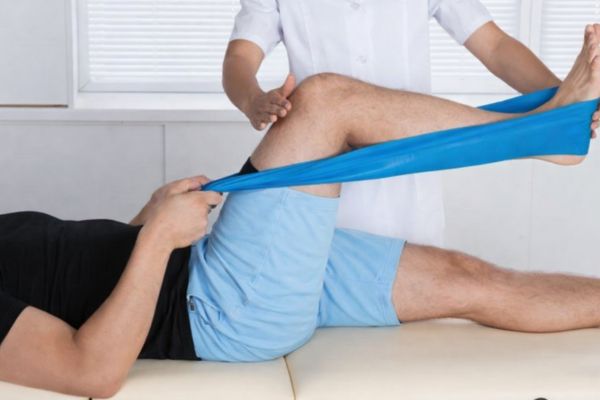
Place a light resistance band around your feet while lying on your back with your knees bent. Slowly lower one foot towards the floor before returning to the starting position, ensuring your pelvis remains steady and your breathing stays controlled.
This variation helps improve core endurance, hip stability, and movement control without placing unnecessary stress on the lower back.
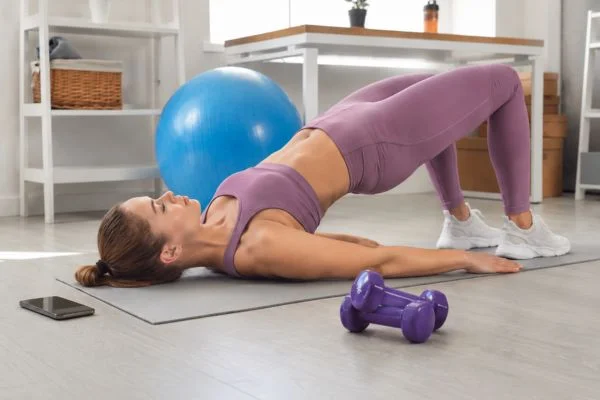
3. Single-Leg Glute Bridge March
This progression combines glute strength with pelvic stability, making it particularly useful for people who want to improve functional movement.
Begin in a bridge position with your hips lifted. Without allowing your pelvis to drop or rotate, slowly lift one knee towards your chest before lowering it and repeating on the opposite side.
Maintaining a level pelvis throughout the movement challenges your deep stabilising muscles while strengthening the glutes, hamstrings, and lower back.
4. Side-Lying Leg Circles
Although often overlooked, Side-Lying Leg Circles are highly effective for improving hip control and lateral core stability.
Lie on one side with your body aligned and your upper leg lifted slightly from the floor. Draw small, controlled circles with your leg while keeping your pelvis stable and avoiding any rolling through your trunk.
This exercise strengthens the hip muscles, obliques, and deep stabilisers that contribute to better balance and more efficient movement. It can be particularly beneficial for runners and active individuals who rely on single-leg stability.
5. Bear Hover Hold
The Bear Hover Hold is a challenging but highly effective Mat Pilates exercise that develops whole-body stability.
Start on your hands and knees with your shoulders positioned over your wrists and your knees beneath your hips. Lift your knees just a few centimeters off the floor while maintaining a neutral spine and steady breathing.
Hold this position for several seconds without allowing your back to arch or your hips to sway.
This exercise improves deep core activation, shoulder stability, pelvic control, and overall body awareness, making it an excellent progression for those looking to build functional strength.
Common Mistakes That Reduce the Benefits of Mat Pilates
Performing the exercises correctly is more important than completing a high number of repetitions. Common mistakes that can reduce the effectiveness of Mat Pilates include:
- Holding your breath during each movement
- Moving too quickly instead of maintaining control
- Allowing your lower back to arch excessively
- Losing a neutral spine position
- Continuing exercises despite pain or discomfort
If an exercise causes pain or feels difficult to control, it is best to stop and seek professional advice before progressing further.
When Should You See a Physiotherapist?
While Mat Pilates is suitable for many people, not every exercise is appropriate for every individual.
If you experience persistent back pain, are recovering from surgery, have a previous injury or struggle with balance and movement control, a physiotherapy assessment can help identify the most appropriate exercises for your condition.
At Go Run Go Physio, we assess your movement patterns and create personalised home exercise programs designed to improve core stability safely and effectively.
Build a Stronger Core with a Personalised Home Exercise Program
Every person moves differently, which is why a personalised exercise program often delivers better long-term results than following generic online workouts. At Go Run Go Physio, our physiotherapists assess your movement, identify areas for improvement, and create tailored home exercise programs designed to improve core stability, enhance movement quality, and reduce the risk of injury.
If you’re ready to move with greater confidence and build a stronger foundation for everyday life, book an appointment with Go Run Go Physio and let our experienced team help you achieve your goals through evidence-based physiotherapy and personalised care.
Frequently Asked Questions
Q1. Can beginners do Mat Pilates exercises for core stability?
Answer: Yes. Many Mat Pilates exercises can be modified to suit beginners. Starting with controlled, low-impact movements allows you to develop proper technique before progressing to more challenging exercises. If you have an injury or existing medical condition, seek advice from a physiotherapist before starting.
Q2. How often should I do Mat Pilates to improve core stability?
Answer: For most people, performing Mat Pilates exercises two to three times per week is enough to improve core stability, posture and movement control. Consistency and good technique will generally produce better results than long or intensive sessions.
Q3. Can Mat Pilates help with lower back pain?
Answer: Mat Pilates may help improve certain types of lower back pain by strengthening the deep core muscles and improving spinal control. However, persistent or worsening pain should always be assessed by a physiotherapist to determine the underlying cause and recommend the most appropriate treatment.
Q4. What’s the difference between core strength and core stability?
Answer: Core strength refers to the force your muscles can generate, while core stability is your body’s ability to control and support the spine and pelvis during movement. Both are important, but stability provides the foundation for efficient, pain-free movement.
Q5. Should I see a physiotherapist before starting Mat Pilates?
Answer: If you have ongoing pain, a recent injury or are unsure which exercises are appropriate for you, it is advisable to see a physiotherapist. A personalised assessment helps ensure your exercise program is safe, effective and tailored to your goals.