 +61 401 458 166
Pain at the back of the heel can make walking, running or exercising uncomfortable. But not all heel pain comes from the same structure. Heel bursitis and Achilles tendon pain can feel similar, yet they affect different tissues and may require different approaches to rehabilitation.
Understanding where your pain is coming from can help you take the right next step rather than continuing with activities or exercises that aggravate it.
What Is the Difference Between Heel Bursitis and Achilles Tendon Pain?
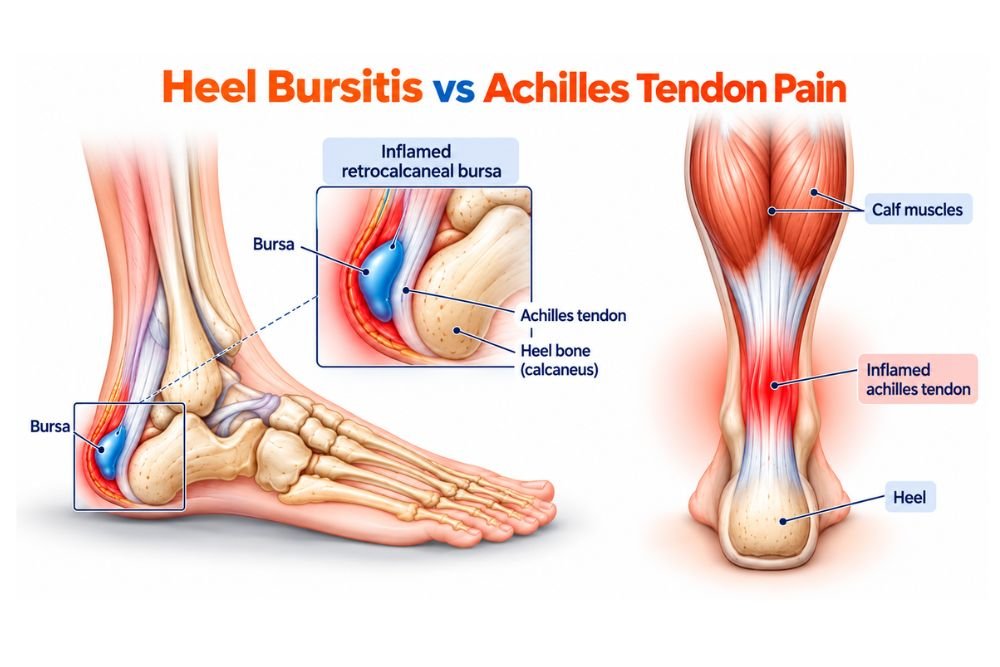
Heel bursitis occurs when a bursa, a small fluid-filled sac that helps reduce friction around a joint, becomes irritated. One type, called retrocalcaneal bursitis, occurs between the Achilles tendon and heel bone.
Achilles tendon pain, on the other hand, affects the Achilles tendon itself. This strong tendon connects the calf muscles to the heel bone and is heavily involved in walking, running and jumping.
Because both conditions can cause pain around the back of the heel, distinguishing between them based on symptoms alone can sometimes be difficult.
What Does Heel Bursitis Feel Like?
Heel bursitis may cause tenderness, swelling or pain around the back of the heel. Some people notice that pressure from shoes makes their symptoms worse, particularly when the heel counter repeatedly rubs or presses against the painful area.
Pain may also increase during walking or other activities that place pressure on the heel.
The location of the discomfort can provide useful information, but symptoms can overlap with other causes of heel pain. A proper assessment is therefore important if the problem persists or interferes with your normal activities.
What Does Achilles Tendon Pain Feel Like?
Achilles tendon pain can occur along the tendon or close to where it attaches to the heel bone. Stiffness and discomfort may be noticeable when you first start moving after rest and can increase when the tendon is repeatedly loaded.
Running, jumping, climbing stairs and pushing off through the foot can all place significant demands on the Achilles tendon.
Symptoms may develop after a sudden increase in training, running volume or other physical activity, although Achilles problems can have several contributing factors.
Heel Bursitis vs Achilles Tendon Pain: Key Differences
While the symptoms can overlap, the main difference is the tissue involved.
| Feature | Heel bursitis | Achilles tendon pain |
| Affected tissue | Bursa around the heel | Achilles tendon |
| Typical location | Around or behind the heel | Along or near the Achilles tendon |
| Common aggravating factor | Pressure or friction | Repeated tendon loading |
| Possible symptoms | Tenderness, swelling and pain | Pain, stiffness and tenderness |
| Often aggravated by | Tight or rubbing footwear and activity | Running, jumping and repeated loading |
This comparison can help you understand the possible source of your symptoms, but it should not be used as a substitute for an individual assessment.
What Causes Heel Bursitis or Achilles Tendon Pain?
Both conditions can be associated with changes in physical activity and repeated stress on the tissues.
Heel bursitis may be aggravated by pressure and friction around the heel, including footwear that repeatedly irritates the area.
Achilles tendon pain can occur when the tendon is exposed to more load than it is currently able to tolerate. A sudden increase in running, jumping, training volume or intensity may contribute.
Other factors, including calf strength, training habits, recovery and previous injuries, can also influence how the heel and Achilles respond to activity.
What Helps Heel Bursitis and Achilles Tendon Pain?
Treatment depends on the underlying problem, severity of symptoms and the activities you want to return to.
For heel bursitis, reducing irritating pressure and modifying activities that aggravate the area may help settle symptoms. Footwear may also need to be considered if it is rubbing or compressing the heel.
For Achilles tendon pain, progressive rehabilitation and appropriate tendon loading are commonly important. A physiotherapist may prescribe exercises to gradually improve calf and Achilles strength and the tendon’s ability to tolerate activity.
The goal is not necessarily complete rest. Instead, activity can often be modified according to your symptoms and gradually increased as your capacity improves.
How Physiotherapy Can Help Heel Pain
A physiotherapy assessment can help identify which structures may be contributing to your heel pain and determine how the symptoms respond to movement and loading.
Your physiotherapist may assess your ankle and calf movement, strength, tendon loading tolerance, activity history and other factors relevant to your symptoms.
At Go Run Go Physio, treatment for heel and Achilles pain can be tailored around your symptoms, exercise requirements and goals. Depending on your assessment, physiotherapy may include exercise-based rehabilitation, load management, mobility work and other appropriate treatment strategies.
Rather than simply treating the painful area, the aim is to help you understand your symptoms and progressively restore your ability to walk, run or exercise comfortably.
FAQs
Can shoes make heel bursitis worse?
Yes. Shoes that press or rub against the back of the heel can aggravate an irritated bursa. If a particular pair consistently increases your symptoms, changing the footwear or reducing pressure on the area may help.
Can I keep running with Achilles tendon pain?
It depends on the severity of your symptoms and how your Achilles responds to load. Some people can continue modified running, while others may need a temporary reduction in running. A physiotherapist can help determine an appropriate activity level and progression.
Does Achilles tendon pain always mean the tendon is damaged?
Not necessarily. Pain does not always directly indicate the extent of tissue damage. Achilles symptoms can be influenced by the tendon’s ability to tolerate load, recent changes in activity and other individual factors. An assessment can help determine an appropriate rehabilitation approach.
How long does heel bursitis take to settle?
Recovery varies depending on the cause, severity and how the area is being loaded or irritated. Continuing activities that repeatedly aggravate the bursa may delay improvement. If symptoms are persistent, assessment can help identify the factors contributing to them.
Should I stretch my calf if I have Achilles or heel pain?
Not always. Calf stretching may be appropriate for some people, but it can aggravate symptoms in others, particularly when the Achilles or tissues around the heel are sensitive. Your rehabilitation should be based on your individual presentation rather than a generic stretching routine.
Get the Right Treatment for Persistent Heel Pain
Heel bursitis and Achilles tendon pain can occur in a similar area, but they involve different tissues and may respond differently to treatment. If your heel pain is persistent, affecting your walking or limiting running and exercise, an individual assessment can help identify the likely source and guide your rehabilitation.
Go Run Go Physio can help you understand your heel pain and develop a progressive physiotherapy plan based on your symptoms, activity, and goals.