 +61 401 458 166
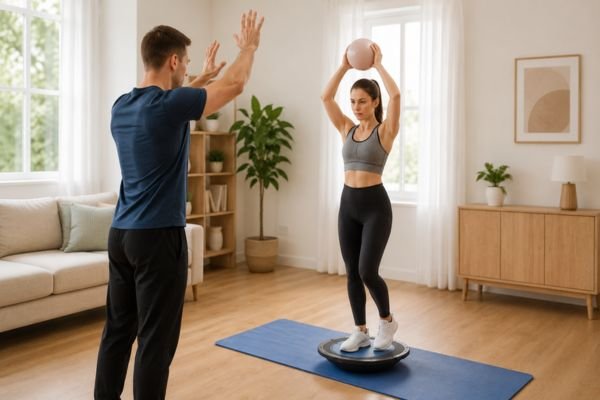
Feeling unsteady, dizzy, or less confident on your feet can make everyday activities such as walking, turning, climbing stairs, or getting out of a chair more difficult. Your vestibular system, located within the inner ear, works with your eyes, brain, muscles, and joints to help you maintain balance.
For some people,
for balance can help improve stability, movement control, and confidence. However, the most suitable exercises depend on the underlying cause of your symptoms. If dizziness or balance problems are persistent, a physiotherapy assessment can help determine the right approach.
How Vestibular Exercises Can Help Improve Balance
The vestibular system provides your brain with information about the position and movement of your head. When this system is not working effectively, you may experience dizziness, unsteadiness, or difficulty maintaining your balance.
Vestibular rehabilitation exercises are designed to help the brain adapt to changes in balance information. Depending on your condition, exercises may focus on eye and head coordination, standing balance, walking, or functional movements.
People experiencing dizziness, reduced balance confidence, or unsteadiness may benefit from an individually tailored program of physiotherapy balance exercises.
Best Vestibular Exercises to Improve Balance at Home
Some balance exercises can be performed at home when they are appropriate for your condition. Always exercise in a safe area, keep a stable support nearby, and avoid movements that cause severe or prolonged symptoms.
1. Gaze Stabilisation Exercise
Gaze stabilisation exercises can help train your eyes and brain to work together while your head is moving.
Sit or stand safely and focus on a fixed target in front of you. Keeping your eyes on the target, slowly turn your head from side to side. Begin with gentle movements and increase the speed only when you can perform the exercise comfortably and safely.
The appropriate duration and progression can vary, so a physiotherapist can guide you according to your symptoms.
2. Standing Weight Shifts
Weight-shifting exercises are a simple way to practice controlling your balance while standing.
Stand near a sturdy bench or kitchen counter. Slowly shift your weight from side to side, then forwards and backwards, while keeping your movements controlled. Avoid moving beyond the point where you feel unstable.
This exercise can be particularly useful as part of a gradual home balance exercise routine.
3. Heel-to-Toe Walking
Heel-to-toe walking challenges your balance and coordination during movement.
Stand near a clear pathway and walk slowly, placing the heel of one foot close to the toes of the other. Keep your movements controlled and use a nearby support if necessary.
Do not attempt this exercise in an area where a loss of balance could result in a fall.
4. Single-Leg Stand
Single-leg standing can help develop balance and lower-limb control.
Stand beside a stable surface such as a kitchen bench. Hold the support if needed and gently lift one foot from the floor. Maintain your balance for as long as you can do so safely, then change sides.
As your balance improves, the exercise can be progressed under professional guidance.
5. Sit-to-Stand Exercise
Sit-to-stand is a functional balance exercise that also works the muscles needed for everyday activities.
Sit towards the front of a sturdy chair with your feet positioned comfortably beneath you. Lean forward slightly and stand up in a controlled manner. Slowly lower yourself back into the chair.
This exercise can help build lower-limb strength, movement control, and confidence with everyday tasks.
A Simple Home Balance Exercise Routine
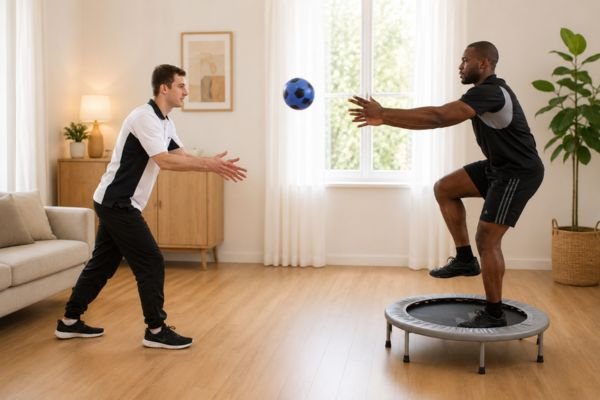
A home balance exercise routine should be based on your current ability rather than a one-size-fits-all program.
A beginner routine may include:
- Gaze stabilisation practice
- Controlled standing weight shifts
- Sit-to-stand exercises
- Short periods of heel-to-toe walking
- Supported single-leg balance
Start gradually and perform exercises in a safe environment. Allow your symptoms to settle between exercises and increase the difficulty only when you can complete the current level with good control.
If you have an existing vestibular condition, your physiotherapist can recommend the appropriate repetitions, duration, and progression.
How Often Should You Do Vestibular Exercises?
The frequency of vestibular exercises depends on your diagnosis, symptoms, and individual rehabilitation goals. Consistency is generally more important than trying to do too much at once.
Some exercises may temporarily increase mild symptoms as your balance system adapts. However, significant, worsening, or persistent symptoms should not be ignored. If you are unsure whether an exercise is suitable for you, speak with a qualified physiotherapist.
When Should You See a Physiotherapist for Balance Problems?
Consider seeing a physiotherapist if you have ongoing dizziness, frequent unsteadiness, difficulty walking, reduced balance confidence, or a history of falls or near-falls.
A physiotherapist can assess your balance, movement, symptoms, and functional ability to determine whether vestibular physiotherapy or another form of rehabilitation may be appropriate.
At Go Run Go Physio, an individual assessment can help identify suitable exercises and provide a structured rehabilitation program based on your needs, rather than relying on generic exercises found online.
When Balance Problems Need Urgent Medical Attention
Not every episode of dizziness or loss of balance is caused by a vestibular problem. Sudden or severe dizziness accompanied by symptoms such as new weakness or numbness, difficulty speaking, new vision problems, fainting, severe headache, chest pain or a sudden inability to walk requires urgent medical assessment.
Do not rely on home balance exercises to manage unexplained or potentially serious symptoms.
Improve Your Balance With the Right Vestibular Exercise Program
Vestibular exercises can be a useful part of rehabilitation for some people experiencing dizziness, unsteadiness, or balance difficulties. Exercises such as gaze stabilisation, weight shifting, heel-to-toe walking, single-leg balance, and sit-to-stand practice can help address different aspects of balance when appropriately selected and progressed.
The key is choosing exercises that match the underlying problem and your current abilities. If balance problems are affecting your confidence or everyday activities, Go Run Go Physio can help you understand whether vestibular physiotherapy and personalized physiotherapy balance exercises are suitable for you.
Frequently Asked Questions
Q1. What are the best vestibular exercises for balance?
Answer: The most suitable vestibular exercises depend on the cause of your balance problem. Gaze stabilisation, weight shifting, and balance exercises may be used in vestibular rehabilitation, but a physiotherapist can determine which exercises are appropriate for your condition.
Q2. Can I do vestibular exercises at home?
Answer: Some vestibular exercises can be performed at home, provided they are suitable for your symptoms and ability. Exercises should be performed in a safe environment, preferably with stable support nearby when balance is reduced.
Q3. How often should I do balance exercises?
Answer: There is no single schedule that is appropriate for everyone. Your exercise frequency should reflect your condition, symptoms, and rehabilitation goals. A physiotherapist can provide an individualized program and advise you on how to progress safely.
Q4. Do vestibular exercises help with dizziness?
Answer: Vestibular exercises can help some people with specific vestibular conditions. However, dizziness can have many different causes, so persistent or unexplained dizziness should be assessed by an appropriate healthcare professional.
Q5. When should I see a physiotherapist for balance problems?
Answer: You should consider a physiotherapy assessment if balance problems, dizziness, or unsteadiness are persistent, affecting daily activities, causing falls, or making you uncertain about which exercises are safe to perform.