 +61 401 458 166
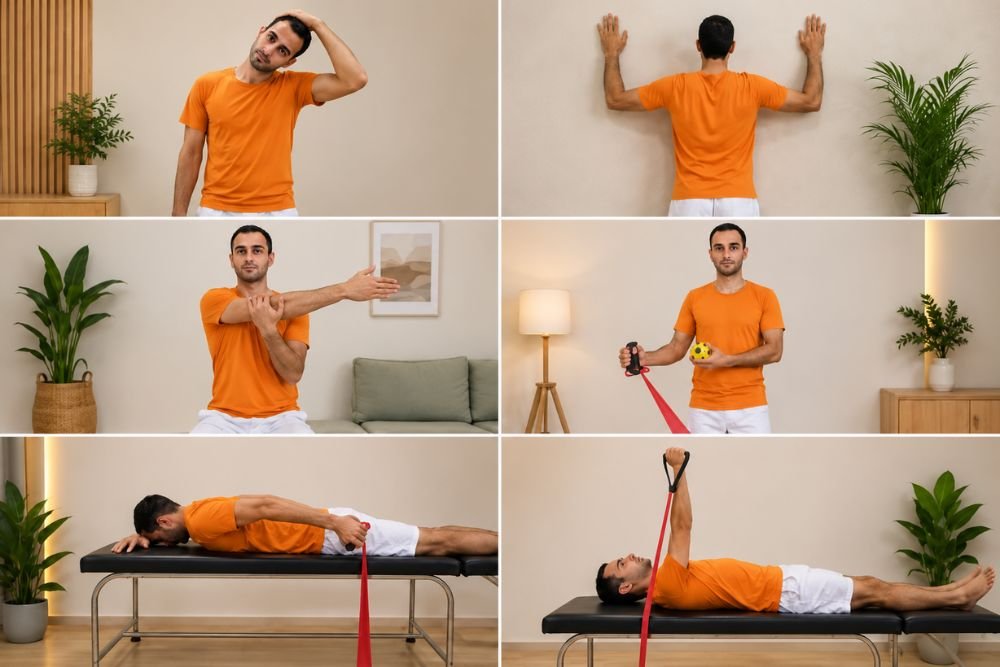
Shoulder impingement can cause pain when reaching overhead, lifting your arm, or performing everyday activities. The right shoulder impingement exercises can help improve shoulder mobility, strength, and function, but the most suitable exercises depend on your symptoms and the underlying cause of your shoulder pain.
If your shoulder pain is persistent or affecting your daily activities, a physiotherapist can assess your shoulder and develop a personalised rehabilitation program.
What Is Shoulder Impingement?
Shoulder impingement is a term commonly used to describe shoulder pain that occurs during certain movements, particularly when raising the arm. It is often associated with rotator cuff-related shoulder pain and can affect activities such as reaching, lifting, dressing, or exercising.
Common symptoms of shoulder impingement
You may experience:
- Pain when lifting your arm or reaching overhead
- Shoulder pain when lying on the affected side
- Weakness in the shoulder or arm
- Reduced shoulder movement
- Pain during repetitive activities
- Discomfort when reaching behind your back
Shoulder pain can have several causes, so an accurate assessment is important before starting a specific rehabilitation program.
Best Shoulder Impingement Exercises
The best exercises for shoulder impingement vary from person to person. A physiotherapist may recommend a combination of shoulder mobility exercises and progressive strengthening exercises based on your symptoms, movement, and strength.
1. Pendulum exercise
A gentle pendulum exercise can help maintain comfortable shoulder movement.
Support yourself with your unaffected arm and allow the affected arm to hang loosely. Gently move the arm forwards and backwards or make small circles without forcing the movement.
This can be useful when shoulder movement is uncomfortable, particularly during the earlier stages of rehabilitation.
2. Wall slides
Wall slides are a simple shoulder mobility exercise that can help you practice controlled overhead movement.
Stand facing a wall and place your hands against it. Slowly slide your hands upwards as far as feels comfortable, then return to the starting position. Keep the movement controlled and avoid forcing your shoulder into a painful range.
3. Shoulder external rotation
External rotation exercises can help strengthen muscles around the shoulder, including the rotator cuff.
Using a light resistance band, keep your elbow close to your side and slowly rotate your forearm outwards. Return to the starting position with control.
Start with light resistance and focus on good technique rather than using a heavy band.
4. Scapular strengthening
The muscles that control your shoulder blade, or scapula, play an important role in shoulder movement and stability.
Exercises that encourage controlled shoulder-blade movement can form part of a broader shoulder rehabilitation program. Your physiotherapist can determine which strengthening exercises are appropriate for your individual needs.
5. Resistance-band shoulder exercises
As your shoulder becomes stronger, resistance-band exercises can be gradually progressed to improve strength and control.
The amount of resistance should be appropriate for your current ability. Increasing the resistance too quickly may aggravate your symptoms, so gradual progression is important.
How Often Should You Do Shoulder Impingement Exercises?
Consistency is generally more important than doing excessive amounts of exercise. However, the appropriate frequency depends on your symptoms, exercise selection and stage of rehabilitation.
Your physiotherapist may adjust your exercise program as your shoulder strength and movement improve. A gradual approach can help you build capacity without unnecessarily aggravating your symptoms.
When should you stop an exercise?
Stop an exercise and seek professional advice if you experience significant or sharp pain, increasing symptoms, new weakness, or a noticeable reduction in shoulder movement.
Exercise should be appropriately challenging, but it should not cause symptoms that continue to worsen.
When Should You See a Physio for Shoulder Pain?
Consider seeing a physiotherapist if you have shoulder pain:
- Continues despite modifying activities
- Interferes with sleep
- Makes work, exercise, or everyday tasks difficult
- Is associated with weakness
- Limits your shoulder movement
- Keeps returning
How can physiotherapy help shoulder pain?
A physiotherapist can assess your shoulder movement, strength, and symptoms to identify factors that may be contributing to your pain. Treatment may include an individualised exercise program, strength and mobility work, activity modification, and advice on gradually returning to normal activities.
If you have been searching for shoulder physio near me, an assessment can help you understand your symptoms and choose an appropriate rehabilitation approach rather than relying on a generic exercise program.
Get Personalised Shoulder Physiotherapy at Go Run Go Physio
Shoulder pain does not always have one single cause, and the same exercise may not be suitable for everyone. At Go Run Go Physio, our physiotherapy approach focuses on assessing your symptoms and developing a rehabilitation plan suited to your goals and current ability.
If shoulder pain is affecting your work, exercise, sleep or everyday activities, book an assessment with Go Run Go Physio to discuss your shoulder pain and rehabilitation options.
Frequently Asked Questions
Q1. What is the best exercise for shoulder impingement?
Answer: There is no single best exercise for everyone with shoulder impingement. Exercises such as shoulder mobility, rotator cuff and scapular strengthening exercises may be included depending on your symptoms, movement and strength.
Q2. Can shoulder impingement improve with exercise?
Answer: Appropriate rehabilitation exercises can help improve shoulder strength, movement and function and may reduce pain. Recovery varies between individuals, so an assessment can help determine the most appropriate approach.
Q3. Should I exercise if my shoulder hurts?
Answer: Some shoulder exercises may be appropriate when you have shoulder pain, but you should avoid exercises that cause significant or worsening symptoms. A physiotherapist can help you modify exercises and determine an appropriate level of loading.
Q4. How long does shoulder impingement take to improve?
Answer: Recovery time varies depending on the duration and severity of symptoms, your activity levels and how your shoulder responds to rehabilitation. Consistent, appropriately progressed exercise can support recovery.
Q5. When should I see a physiotherapist for shoulder pain?
Answer: See a physiotherapist if your shoulder pain persists, affects sleep or daily activities, causes weakness or restricts movement. Professional assessment can help identify contributing factors and guide your rehabilitation.