

Why early symptoms deserve attention
The early signs of carpal tunnel syndrome often begin quietly. Many people notice occasional tingling in the fingers, mild wrist discomfort, or numbness that comes and goes during the day. These symptoms may seem minor at first, yet they can gradually interfere with sleep, work, grip strength, and daily activities.
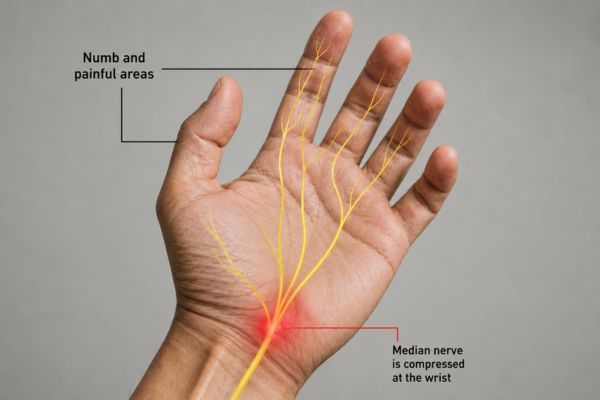
Carpal tunnel syndrome develops when the median nerve becomes compressed as it passes through a narrow passage in the wrist called the carpal tunnel. This nerve controls sensation in parts of the hand and supports movement in several thumb muscles. When pressure increases inside the tunnel, the nerve becomes irritated and symptoms begin to appear.
Many people ignore the first warning signs because they believe the discomfort will settle on its own. Delayed care may allow the irritation to worsen, making recovery slower and more difficult later on. Early physiotherapy support often helps reduce nerve pressure before symptoms become more advanced.
For people using keyboards, tools, phones, or repetitive hand movements throughout the day, recognising the warning signs early can make a meaningful difference.
Common sensations people notice first
One of the most common carpal tunnel syndrome symptoms is tingling in the thumb, index finger, middle finger, and part of the ring finger. Some people describe the sensation as pins and needles or an electric feeling inside the hand.
Numbness in fingers in carpal tunnel cases usually begins gradually. Symptoms may appear while driving, holding a phone, reading a book, or typing for extended periods. Shaking the hand sometimes brings temporary relief.
Many patients also notice:
- Mild burning sensations in the wrist or palm
- Fingers feeling swollen despite no visible swelling
- Reduced sensitivity when touching objects
- Difficulty gripping small items
- Hand discomfort after repetitive activity
Symptoms may affect one hand first, although both hands often become involved over time.
Why symptoms often appear at night
Nighttime symptoms are among the earliest carpal tunnel warning signs. Many people wake with tingling hands or aching wrists and need to change position before returning to sleep.
This often happens because the wrist bends during sleep, increasing pressure inside the carpal tunnel. Fluid shifts during the night may also contribute to nerve compression.
Repeated sleep disturbance can lead to daytime fatigue and reduced concentration at work. Some people begin dropping objects or noticing slower hand movement after poor sleep continues for several weeks.
Night symptoms often suggest that the nerve irritation has started progressing beyond occasional strain. Early treatment may help prevent ongoing nerve sensitivity.
Daily habits linked to wrist nerve pressure
Carpal tunnel syndrome does not always develop from one single cause. In many cases, repeated stress on the wrist builds gradually over time.
Certain activities increase strain on the wrist and hand muscles more frequently than others. These include prolonged gripping, repetitive finger movement, forceful wrist bending, and poor workstation setup.
The table below outlines common activities linked to increased median nerve irritation.
| Activity | How It Affects The Wrist |
| Long hours typing | Repeated finger movement increases tendon irritation |
| Using vibrating tools | Vibration may irritate wrist tissues |
| Holding phones for long periods | Sustained wrist bending raises pressure |
| Repetitive lifting | Continuous gripping strains tendons |
| Poor desk posture | Incorrect wrist angles compress the nerve |
People working in office roles, trades, healthcare, beauty services, hospitality, and warehouse settings often experience repetitive wrist strain during daily work routines.
How symptoms progress over time
Early symptoms may come and go, though ongoing nerve pressure usually leads to more persistent discomfort. The condition can gradually affect hand strength, coordination, and movement quality.
As compression increases, symptoms may include pain travelling from the wrist into the forearm. Some people notice difficulty opening jars, fastening buttons, or carrying shopping bags.
More advanced symptoms can include:
- Frequent numbness during the day
- Reduced thumb strength
- Difficulty holding objects securely
- Loss of fine finger control
- Persistent hand pain after activity
Ignoring symptoms for several months may increase the risk of long term nerve irritation.
Conditions that increase the risk
Several health and lifestyle factors can increase the likelihood of developing carpal tunnel syndrome. These factors may contribute to swelling, tissue irritation, or increased pressure around the median nerve.
People with the following conditions may face a higher risk:
- Diabetes
- Arthritis affecting the wrist
- Pregnancy related fluid retention
- Thyroid conditions
- Previous wrist injuries
- Obesity
- Inflammatory conditions affecting joints and tendons
Hormonal changes and fluid retention may also increase symptoms during pregnancy. Many pregnant women notice numbness or tingling during the third trimester due to increased tissue swelling around the wrist.
When hand weakness becomes noticeable
Hand weakness often appears later in the condition, though some people notice reduced grip strength earlier than expected.
Tasks that once felt simple may become frustrating. Holding a coffee mug, turning keys, carrying grocery bags, or opening containers can suddenly feel more difficult.
The thumb muscles rely heavily on proper median nerve function. Ongoing compression may weaken these muscles and reduce hand control.
People sometimes describe:
- Clumsiness while handling objects
- Dropping items unexpectedly
- Reduced pinch strength
- Difficulty writing for extended periods
- Slower hand movement during work tasks
These changes should not be ignored. Persistent weakness may indicate increasing nerve involvement requiring professional assessment.
How physiotherapists assess wrist nerve irritation
A physiotherapist examines several factors before confirming whether symptoms relate to carpal tunnel syndrome or another condition affecting the neck, shoulder, elbow, or wrist.
Assessment usually includes discussing:
- Symptom location
- Night pain patterns
- Work activities
- Hand weakness
- Previous injuries
- Daily movement demands
Physical assessment may involve testing wrist mobility, nerve sensitivity, grip strength, posture, and hand coordination.
At Go Run Go Physio, physiotherapy assessments focus on identifying movement habits and wrist stresses contributing to ongoing irritation rather than only treating symptoms alone.
Treatment options that support recovery
Treatment depends on symptom severity, duration, and the activities contributing to wrist strain. Early physiotherapy care often helps reduce symptoms before surgical intervention becomes necessary.
Physiotherapy treatment may include manual therapy, movement correction, nerve gliding techniques, wrist support advice, and activity modification strategies.
Management often focuses on reducing pressure within the carpal tunnel while improving wrist movement and tissue mobility.
Treatment approaches may include:
- Wrist splint guidance for night support
- Soft tissue therapy for tight forearm muscles
- Nerve mobility techniques
- Postural correction strategies
- Strengthening programmes for hand and wrist control
- Workplace setup advice
Some patients improve with conservative management alone, while others with advanced nerve compression may require medical referral.
Finding the best physiotherapist for carpal tunnel care involves choosing a clinic that understands repetitive strain conditions and movement based rehabilitation.
Exercises for carpal tunnel relief
Specific movements may help reduce stiffness, improve circulation, and support nerve mobility when performed correctly. Exercises for carpal tunnel relief should remain gentle and controlled.
Wrist flexor stretch
Extend one arm forward with the palm facing upward. Use the opposite hand to gently pull the fingers downward until a mild stretch appears in the forearm. Hold for fifteen to twenty seconds.
Median nerve glide
Extend the arm to the side with the palm facing upward. Slowly straighten the wrist and fingers while keeping the movement controlled. Stop if symptoms increase sharply.
Tendon gliding movement
Move the fingers through several positions including straight fingers, hook fist, full fist, and open hand positions. This may support tendon movement inside the carpal tunnel.
Shoulder posture correction
Poor shoulder positioning may increase tension through the arm and wrist. Gentle shoulder blade retraction exercises may improve upper limb alignment during desk work.
Exercises should remain comfortable and should not increase numbness or pain for extended periods afterwards.
When professional care becomes important
Occasional tingling after heavy activity may settle quickly, though symptoms that continue for several weeks deserve professional attention.
You should arrange assessment if you notice:
- Night symptoms occurring regularly
- Persistent numbness in the fingers
- Hand weakness during daily tasks
- Pain travelling into the forearm
- Difficulty gripping objects
- Symptoms interfering with work or sleep
Go Run Go Physio provides assessment and physiotherapy management for wrist pain, nerve irritation, repetitive strain conditions, and hand weakness linked to carpal tunnel syndrome symptoms. Treatment plans focus on improving movement quality, reducing irritation, and supporting long term recovery.
Frequently Asked Questions
Q1. Can carpal tunnel syndrome go away without treatment?
Answer: Mild symptoms sometimes settle if aggravating activities reduce early enough. Ongoing symptoms usually require assessment and management to prevent worsening nerve irritation.
Q2. Which fingers are affected most often?
Answer: The thumb, index finger, middle finger, and part of the ring finger are commonly affected because the median nerve supplies sensation to these areas.
Q3. Is numbness always constant?
Answer: No. Early numbness often comes and goes. Many people notice symptoms during sleep, driving, or repetitive hand activity before numbness becomes more persistent.
Q4. Are exercises enough to fix carpal tunnel syndrome?
Answer: Exercises may help mild cases when combined with activity modification and physiotherapy guidance. More advanced nerve compression may require additional treatment.
Q5. How long does recovery take?
Answer: Recovery time varies depending on symptom severity, work demands, and how early treatment begins. Mild cases may improve within several weeks, while persistent symptoms may require longer management.