 +61 401 458 166

Understanding ankle sprains and why recovery matters
An ankle sprain can disrupt daily life more than expected. Many people assume it will settle on its own, yet without proper care, the joint may remain weak and unstable. This is where physiotherapy for ankle sprain becomes important. It supports safe healing, restores movement, and reduces the chance of repeat injury.
The ankle relies on ligaments to keep it stable. When these ligaments stretch or tear, even a mild injury can affect walking, running, or standing for long periods. Early management shapes how well the ankle recovers over time.
Common causes and early symptoms
A sprain often occurs when the foot rolls inward or outward beyond its normal range. This can happen during sport, walking on uneven ground, or even stepping off a curb awkwardly.
Early signs may include:
- Pain around the ankle joint
- Swelling that appears within hours
- Difficulty placing weight on the foot
- Bruising or tenderness
Recognising these signs early allows for better sprained ankle treatment and reduces the risk of long-term instability.
Ankle sprain healing stages explained
Recovery does not happen all at once. The body follows a sequence of healing stages, each requiring a different approach.
| Stage | Timeframe | What happens | Focus of care |
| Initial phase | 1 to 3 days | Inflammation and swelling | Protect and reduce swelling |
| Repair phase | 4 days to 3 weeks | Tissue begins to rebuild | Gentle movement and support |
| Strength phase | 3 to 6 weeks | Ligaments regain strength | Controlled loading and rehab |
| Functional phase | 6 weeks onwards | Return to normal activity | Balance and sport-specific work |
Understanding these ankle sprain healing stages helps guide the right treatment at the right time.
Why physiotherapy for ankle sprain plays a central role
Rest alone is rarely enough for full recovery. Without guided movement, the ankle may become stiff and weak. Ankle injury physio focuses on restoring strength, coordination, and control.
Physiotherapy also addresses hidden issues such as poor balance or altered walking patterns. These factors often lead to repeated sprains if left untreated.
A structured plan often includes:
- Gradual return to movement
- Strength building for surrounding muscles
- Stability training to protect the joint
This approach reflects the best treatment for ankle sprain rather than relying on rest alone.
Assessment process during ankle injury physio
During the first session, a physiotherapist evaluates how the injury occurred and how the ankle is functioning.
This may include:
- Observing walking patterns
- Checking range of motion
- Testing ligament stability
- Identifying areas of weakness
The aim is to create a plan that suits the individual rather than applying a fixed routine. This ensures that recovery progresses safely without overloading the injured tissue.
Techniques used in sprained ankle treatment
Physiotherapy combines several techniques to support healing. Each method has a clear purpose and is introduced at the right stage.
Manual therapy may help restore joint movement and reduce stiffness. Soft tissue work can ease surrounding muscle tension.
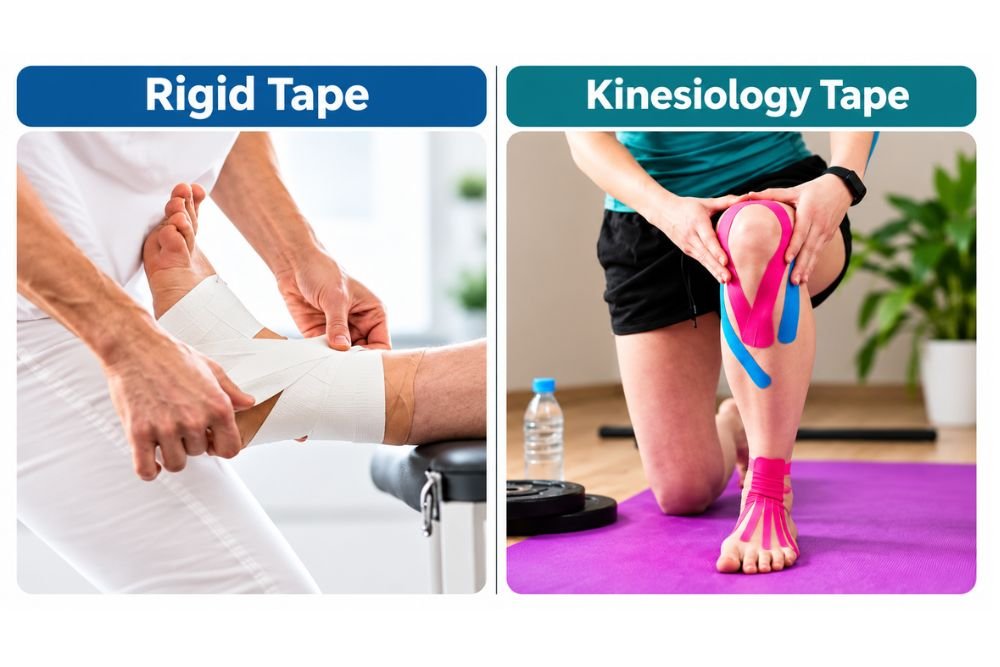
Taping or bracing may be used to support the ankle during early recovery. This allows movement while reducing strain on healing ligaments.
Education also plays a part. Understanding how to move safely and when to progress helps avoid setbacks.
Ankle sprain rehab exercises that support recovery
Movement is introduced gradually. Early activity focuses on restoring mobility, while later stages build strength and control.
Common ankle sprain rehab exercises include:
- Gentle ankle circles to improve mobility
- Resistance band movements for strength
- Heel raises to support calf muscles
- Balance drills to improve joint stability
Each exercise has a purpose and should match the current stage of healing. Progression is based on how the ankle responds rather than a fixed timeline.
Managing swelling and pain during recovery
Swelling often limits movement and slows progress. Managing it early supports better outcomes.
Swollen ankle recovery treatment may involve:
- Elevation to reduce fluid build-up
- Controlled movement to improve circulation
- Compression where appropriate
Pain should guide activity levels. Sharp or increasing pain may signal that the ankle is not ready for the current level of load.
When to return to sport or daily activities
Returning too soon increases the risk of another injury. The ankle should be able to handle load, direction changes, and uneven surfaces before resuming sport.
Signs that recovery is progressing well include:
- Full range of motion without pain
- Strength comparable to the uninjured side
- Confidence during movement
A physiotherapist helps assess readiness and adjust activity levels safely.
Choosing the best physiotherapist for sprained ankle care
Finding the best physiotherapist for sprained ankle recovery involves more than convenience. Look for a clinic that focuses on active rehabilitation and clear guidance.
Consider:
- Experience with sports and ankle injuries
- Structured rehabilitation plans
- Clear communication about progress
A clinic such as Go Run Go Physio provides targeted care that supports both recovery and long-term joint health.
When to seek help from Go Run Go Physio
If pain persists, swelling does not settle, or the ankle feels unstable, professional care becomes important. Early physiotherapy reduces recovery time and improves outcomes.
Go Run Go Physio offers tailored treatment plans designed to restore strength, movement, and confidence. Whether the injury is recent or ongoing, structured care helps prevent repeat issues.
Frequently Asked Questions
Q1. How long does a sprained ankle take to heal?
Answer: Mild sprains may settle within a few weeks, while more severe injuries can take several months. Recovery depends on the extent of ligament damage and the quality of rehabilitation.
Q2. Do I need physiotherapy for a mild ankle sprain?
Answer: Even mild injuries benefit from guidance. Physiotherapy helps restore strength and reduces the chance of future sprains.
Q3. What is the best treatment for an ankle sprain at home?
Answer: Early care includes rest, elevation, and gentle movement. However, combining home care with physiotherapy provides better long-term results.
Q4. When should I start ankle sprain rehab exercises?
Answer: Movement often begins within a few days, depending on pain levels. A physiotherapist can guide the timing and progression safely.
Q5. Can I walk on a sprained ankle?
Answer: Light weight-bearing may be possible, but it should not cause sharp pain. Support and guidance help avoid further damage.
Q6. Why does my ankle still feel weak after recovery?
Answer: Weakness often relates to reduced strength and balance. Targeted rehab addresses these issues and improves stability.