 +61 401 458 166
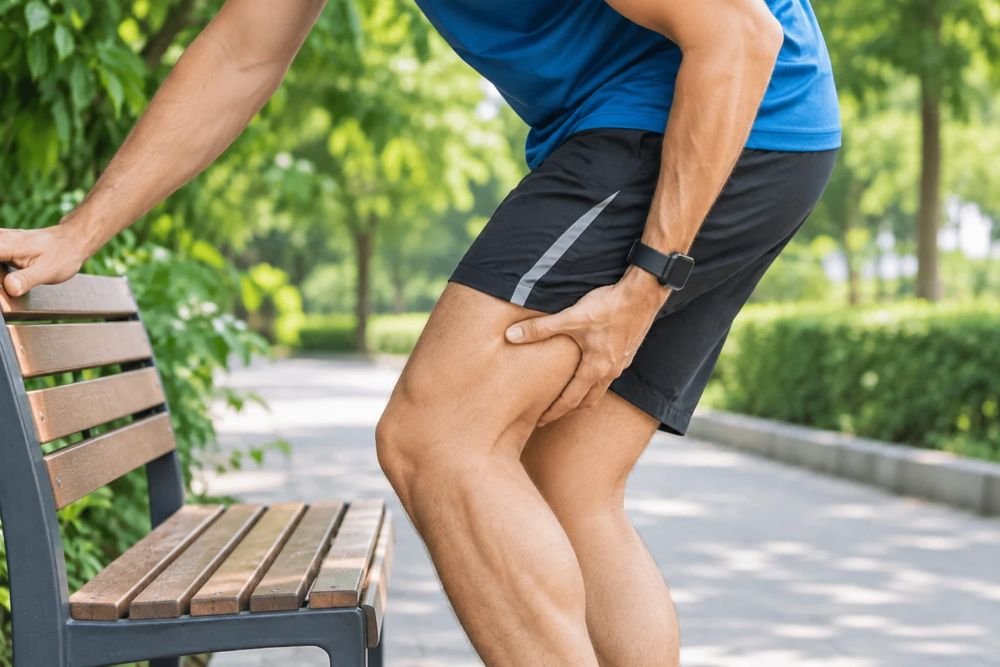
A hamstring strain can make everyday activities such as walking, running and climbing stairs uncomfortable. Whether you have injured your hamstring during a sprint, workout or sporting activity, the right rehabilitation approach plays an important role in recovery. Understanding the hamstring strain recovery stages, knowing which exercises to perform and recognising when your body is ready to return to sport can help you avoid setbacks and reduce the risk of reinjury.
What Is a Hamstring Strain and How Does It Affect Recovery?
A hamstring strain occurs when one or more muscles at the back of your thigh become overstretched or sustain damage to their muscle fibres. The injury can range from minor microscopic fibre damage to a partial or complete muscle tear, depending on its severity. The hamstring muscle group consists of three muscles: the biceps femoris, semitendinosus and semimembranosus. These muscles help bend the knee, while the long head of the biceps femoris, semitendinosus and semimembranosus also help extend the hip.
Hamstring injuries commonly happen during sprinting, sudden acceleration, jumping or activities involving rapid changes in direction.
Symptoms may include sudden pain at the back of the thigh, tenderness, swelling, bruising and difficulty bending the knee or walking comfortably.
Hamstring strains are generally classified into three grades:
| Injury grade | Description |
| Grade 1 | Mild strain with minor muscle fibre damage |
| Grade 2 | Moderate strain involving a partial muscle tear |
| Grade 3 | Severe injury involving a complete muscle tear |
The severity of the injury, its location and your overall health can influence how long recovery takes.
What Are the Stages of Hamstring Strain Recovery?
Hamstring strain recovery involves gradually restoring movement, muscle strength and the ability to perform everyday and sporting activities. Although recovery varies between individuals, rehabilitation generally progresses through the following stages.
Stage 1: Acute Phase – Managing Pain and Swelling
The initial stage focuses on managing discomfort and protecting the injured muscle from further damage. Avoid sprinting, heavy exercise and movements that increase your pain.
Gentle movement within comfortable limits can help maintain mobility. Applying ice wrapped in a towel may provide temporary pain relief during the early stages of a hamstring injury. However, ice should be considered a symptom-management measure rather than a treatment proven to accelerate muscle healing.
Avoid aggressive stretching or returning to running too early, as these activities may aggravate the injury.
Stage 2: Rehabilitation Phase – Restoring Movement and Strength
Once your symptoms begin to settle, rehabilitation can gradually introduce controlled movement and strengthening exercises.
The focus is on improving knee and hip movement while rebuilding the strength of the injured hamstring. Your physiotherapist may initially recommend gentle isometric exercises before progressing to more demanding movements.
Stage 3: Strength and Functional Recovery
During this stage, rehabilitation focuses on rebuilding muscle strength and improving the hamstring’s ability to tolerate increasing physical demands.
Exercises may include glute bridges, resistance training, Romanian deadlifts and progressive eccentric strengthening.
Single-leg exercises and balance training can also help restore control and stability.
Stage 4: Return to Running and Sport
The final stage prepares you for the physical demands of your usual activities.
Rehabilitation gradually introduces jogging, acceleration, sprinting, deceleration, and changes in direction. Athletes may also need sport-specific drills before returning to full training.
Progression should depend on strength, symptoms and functional performance rather than a fixed recovery timetable.
Best Exercises for Hamstring Strain Recovery
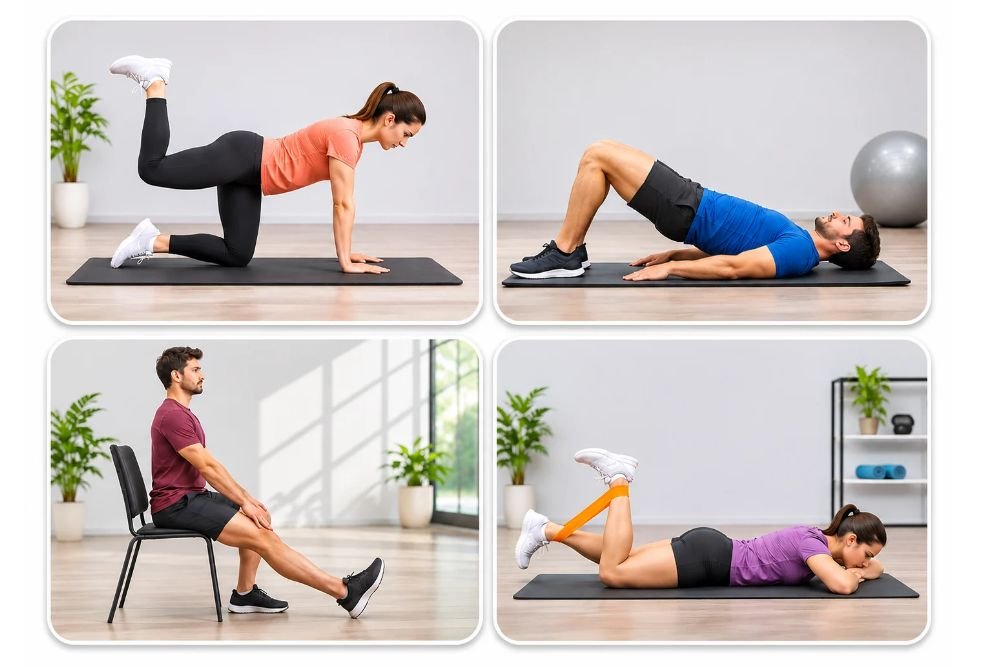
The right hamstring strain exercises depend on the severity of your injury and your current stage of recovery. Exercises should be introduced gradually and adjusted according to your symptoms.
1. Isometric Hamstring Holds
This exercise helps activate the hamstring without requiring significant movement.
Lie on your back with your knees bent and feet on the floor. Gently press one heel into the floor while tightening the hamstring. Hold for a few seconds, relax and repeat as comfortable.
2. Glute Bridges
Glute bridges help strengthen the gluteal muscles and posterior chain while introducing controlled hip movement.
Lie on your back with your knees bent and feet flat on the floor. Tighten your abdominal muscles and lift your hips until your shoulders, hips and knees form a comfortable straight line. Lower slowly.
3. Romanian Deadlifts
Romanian deadlifts help develop hamstring strength through a controlled hip-hinge movement.
Stand with your feet hip-width apart and hold light dumbbells. Push your hips backwards while maintaining a slight bend in your knees. Lower the weights towards your shins, keeping your back neutral, then return to standing.
Start with light resistance when your rehabilitation program allows it.
4. Nordic Hamstring Curls
Nordic hamstring curls are an eccentric strengthening exercise that helps improve the hamstrings’ ability to manage force while lengthening.
Kneel on a padded surface with your ankles secured. Slowly lean forwards, controlling the movement with your hamstrings. Use your hands to catch yourself when necessary.
This is a demanding exercise and should only be introduced once sufficient strength has returned.
5. Progressive Running Drills
Running programs repair your hamstrings for the demands of sport.
Begin with comfortable walking and progress towards jogging, faster running and acceleration drills as your strength and symptoms allow. Sprinting and sudden changes in direction should only be introduced when appropriate.
How Can Physiotherapy Help a Hamstring Strain Heal?
Physiotherapy plays an important role in hamstring strain rehabilitation by helping restore muscle strength, movement and functional ability.
A physiotherapist can assess your injury, identify strength limitations and develop an exercise program suited to your recovery.
Treatment may include progressive strengthening, eccentric exercises, movement retraining and running rehabilitation. Manual therapy may also be used as an additional treatment to help manage symptoms where appropriate.
At Go Run Go Physio, a structured physiotherapy approach can help individuals work towards rebuilding hamstring strength, improving movement and returning to their usual sporting activities with greater confidence.
When Can You Return to Sport After a Hamstring Strain?
Returning to sport too early can increase the risk of reinjury. Before resuming full training, your hamstring should be able to tolerate the demands of your chosen activity.
Before returning to full sport, you should be able to demonstrate near-restored hamstring strength, complete progressively faster running and sprinting at sport-specific intensities without pain, and perform sport-specific movements without restriction. You should also be able to complete full, unrestricted training sessions without symptoms.
Your physiotherapist should assess your strength, running ability and functional performance to help determine whether you are ready to return to training and competition.
The recovery period varies depending on injury severity, so there is no single return-to-sport date suitable for everyone.
When Should You See a Physiotherapist or Doctor for a Hamstring Injury?
Seek professional assessment if you experience severe thigh pain, significant bruising, substantial swelling or difficulty walking. A popping sensation during injury or considerable weakness may indicate a more serious muscle or tendon injury.
Persistent pain and repeated hamstring strains also deserve attention, as they may require a more detailed assessment and rehabilitation plan.
Get Back to Running and Sport with the Right Hamstring Rehabilitation Support
Recovering from a hamstring strain takes time, appropriate exercise, and gradual progression. Rushing back into training before restoring muscle strength can increase the risk of another injury.
If you are experiencing hamstring pain or struggling to return to your usual sporting activities, Go Run Go Physio can help you work towards your recovery goals with an appropriate physiotherapy and rehabilitation program.
Frequently Asked Questions
Q1. Can You Walk Normally with a Hamstring Strain?
Answer: Yes, some people with mild hamstring strains can walk normally or with slight discomfort. More severe injuries may make walking difficult. Avoid pushing through significant pain and seek medical assessment if you struggle to bear weight.
Q2. Is Heat or Ice Better for a Hamstring Injury?
Answer: Ice wrapped in a towel may help manage pain during the early stages of an injury. Heat may feel soothing later, depending on your symptoms. Neither treatment replaces appropriate rehabilitation and progressive strengthening.
Q3. Should You Stretch a Pulled Hamstring?
Answer: Gentle movement may be appropriate during recovery, but aggressive stretching can aggravate an acute hamstring injury. Stretching should be introduced gradually when your symptoms and rehabilitation progress allow it.
Q4. Why Does My Hamstring Still Hurt After Several Weeks?
Answer: Ongoing discomfort may be related to incomplete muscle recovery, excessive training loads or an injury that needs further assessment. A physiotherapist can evaluate your strength and movement to identify what may be delaying your recovery.
Q5. Can a Hamstring Strain Come Back After Healing?
Answer: Yes, hamstring strains can happen again, particularly if muscle strength and running capacity have not been fully restored. Progressive strengthening, appropriate training loads and a structured return-to-sport program can help reduce the risk of reinjury.