

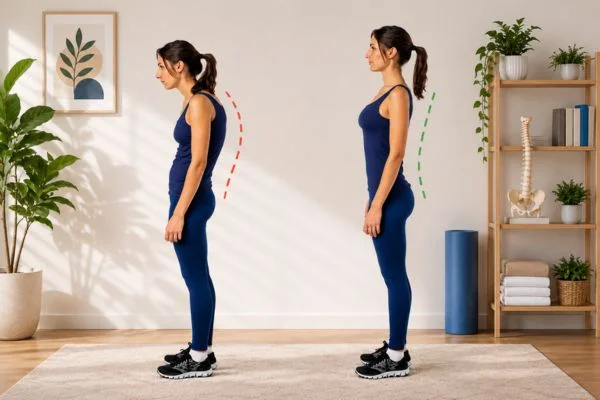
Many people ask, ‘Can physiotherapy fix poor posture?’ The short answer is yes. Physiotherapy can help identify the causes of poor posture, improve body mechanics and reduce the discomfort that often develops when the body remains in mechanically disadvantage positions for extended periods.
Poor posture affects people of all ages. Long hours at a desk, frequent device use, physical inactivity and age related changes can all contribute to postural problems. Over time, poor positioning places extra strain on muscles, joints and connective tissues, often leading to neck discomfort, shoulder tension, upper back stiffness and lower back pain.
While occasional slouching is common, persistent postural issues may require professional assessment and targeted treatment.
Can Physiotherapy Fix Poor Posture?
Physiotherapy is one of the most effective non surgical approaches for posture correction. Rather than focusing only on symptoms, a physiotherapist identifies the underlying factors contributing to poor posture.
These factors may include:
- Muscle weakness
- Joint stiffness
- Reduced mobility
- Poor movement patterns
- Workplace ergonomics
- Age related physical changes
A personalised treatment plan can help restore proper body positioning, improve movement efficiency and reduce strain on affected structures.
Many people searching for physiotherapy for posture correction are often surprised to learn that posture involves more than simply sitting upright. Effective posture correction requires improved strength, mobility, body awareness and movement control.
Common Signs Your Posture Needs Attention
Poor posture can present in several ways. Some signs are obvious, while others develop gradually over time.
You may benefit from a professional posture assessment if you notice:
- Rounded shoulders
- Forward head position
- Frequent neck tension
- Upper back stiffness
- Lower back discomfort
- Difficulty standing for long periods
- Uneven shoulder height
- Reduced flexibility
People working in office environments commonly require desk posture correction due to prolonged sitting and repetitive screen use.
How a Physiotherapist can Assess Posture?
A physiotherapist performs a detailed assessment to determine how your posture affects your movement and overall function.
The assessment typically includes:
| Assessment Area | Purpose |
| Standing posture | Identifies visible postural patterns |
| Sitting posture | Assesses workstation related issues |
| Joint mobility | Evaluates movement restrictions |
| Muscle strength | Detects weakness affecting posture |
| Movement analysis | Reviews functional movement habits |
| Lifestyle review | Identifies contributing daily activities |
This thorough process helps create a treatment plan suited to your specific needs rather than applying a generic approach.
At Go Run Go Physio, posture assessments focus on identifying the factors driving discomfort and movement limitations so treatment addresses the source of the problem.
Treatment Methods Used for Posture Correction
Effective posture correction often combines several treatment techniques.
Manual Therapy
Manual therapy can help improve joint mobility and reduce muscle tightness. Improved movement often makes it easier for patients to maintain healthier postural positions throughout the day.
Postural Retraining
Many people are unaware of their daily posture habits. Postural retraining helps improve body awareness and encourages healthier movement patterns during work, driving and daily activities.
Strengthening Programmes
Weak muscles often contribute to poor posture. A physiotherapist may prescribe targeted posture improvement exercises designed to support the spine, shoulders and core muscles.
Mobility Work
Restricted mobility in the chest, shoulders and hips can influence posture. Mobility focused treatment helps restore normal movement and reduce unnecessary strain.
Workplace Advice
For office workers, ergonomic guidance forms an important part of treatment. Small workstation adjustments often support long term desk posture correction and reduce discomfort during prolonged computer use.
Home Exercise programs
Some individuals may prefer home exercise programs, particularly older adults or those with mobility limitations. Home based treatment allows physiotherapists to assess posture within the person’s everyday environment and provide practical recommendations suited to their living conditions.
How Long Does Posture Correction Take?
The time required depends on several factors, including the severity of the postural issue, daily habits, age and commitment to treatment.
Many patients notice improvements in comfort and body awareness within a few weeks. More established postural patterns may require several months of consistent physiotherapy and home management.
Successful posture correction depends on:
- Regular physiotherapy sessions
- Consistent movement practice
- Workplace modifications
- Following prescribed programmes
- Maintaining healthy daily habits
Patience and consistency often produce the best outcomes.
Simple Habits That Support Better Posture
Professional treatment works best when combined with healthy daily behaviours.
Helpful strategies include:
- Taking regular movement breaks during desk work
- Positioning screens at eye level
- Avoiding prolonged slouched sitting
- Remaining physically active
- Maintaining shoulder and spinal mobility
- Following physiotherapist prescribed exercises
These simple adjustments can support long term postural improvements and reduce recurring discomfort.
Posture Improvement for Older Adults
Postural changes often become more noticeable with age due to reduced muscle strength, joint stiffness and decreased physical activity.
Posture improvement for older adults focuses on maintaining mobility, improving balance, supporting independence and reducing physical strain. Physiotherapy programmes are adapted to suit individual ability levels and health conditions
Frequently Asked Questions
Q1. How many physiotherapy sessions are needed for posture correction?
Answer: The number of sessions varies based on the severity of the problem and individual goals. Some people improve within a few visits, while others require longer treatment plans.
Q2. Can poor posture cause neck and shoulder pain?
Answer: Yes. Poor posture often increases strain on muscles and joints in the neck, shoulders and upper back, which may lead to discomfort and stiffness.
Q3. Is physiotherapy for posture correction suitable for office workers?
Answer: Yes. Office workers commonly benefit from physiotherapy because prolonged sitting and screen use often contribute to postural problems.
Q4. What are the best posture improvement exercises?
Answer: The most effective exercises depend on the individual’s posture assessment findings. A physiotherapist can prescribe movements suited to specific weaknesses and restrictions.
Q5. Can posture improvement help reduce lower back pain?
Answer: Yes. Improving posture often reduces unnecessary stress on the lower back, which may help decrease discomfort and improve movement efficiency.