 +61 401 458 166
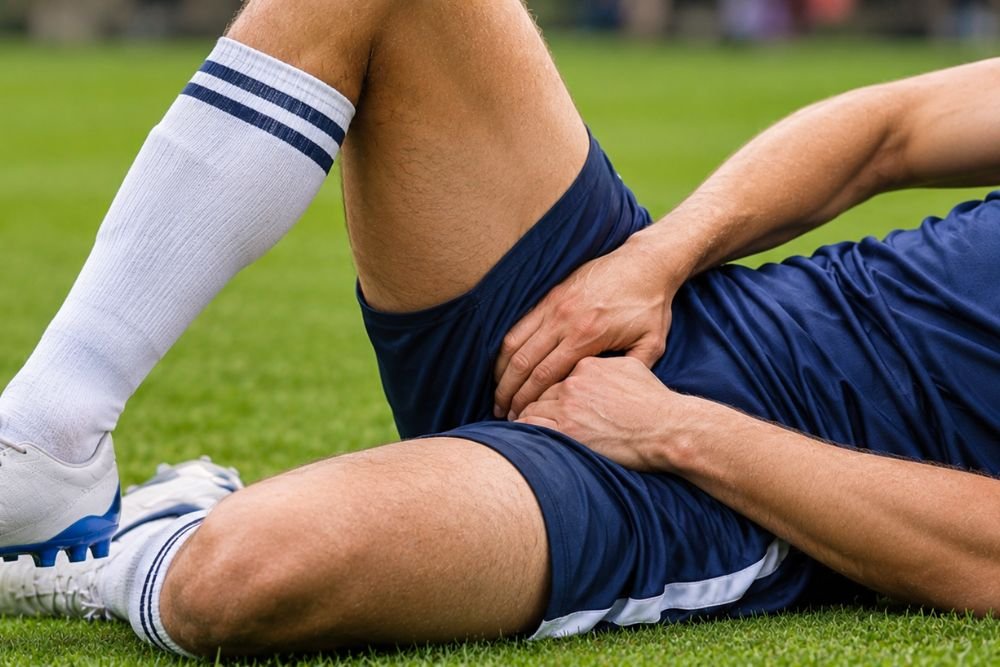
Groin strains are common in football players due to repeated sprinting, kicking, sudden changes in direction and rapid acceleration. These movements place considerable stress on the muscles around the inner thigh and hip, increasing the risk of injury. A groin strain can affect players at every level, from weekend footballers to competitive athletes. Recognising the early symptoms and understanding the right treatment approach can help prevent further complications. With appropriate physiotherapy and structured rehabilitation, players can gradually rebuild strength and return to football with greater confidence.
Understanding Groin Strains in Football Players
A groin strain occurs when one or more muscles in the groin region become overstretched or develop small tears. It most commonly affects the adductor muscles, particularly the adductor longus. However, not all groin pain in football players is caused by a muscle strain. Other structures, including the hip joint, hip flexors and surrounding tendons, can also contribute to groin pain.
Which Muscles Are Commonly Affected?
The adductor longus, adductor brevis and adductor magnus are among the muscles commonly involved in football-related groin injuries. These muscles play an important role in controlling leg movements during kicking, running and changing direction.
Why Are Football Players at Risk?
Football involves repeated high-intensity movements, including sprinting, tackling, sudden stops and powerful kicks. These actions place considerable demands on the adductor muscles, particularly when players lack adequate strength, conditioning or recovery between training sessions. A previous groin injury is also an important risk factor, as athletes with a history of groin injuries have a greater likelihood of experiencing another injury.
Common Symptoms of a Groin Strain
Groin strain symptoms can vary depending on the severity of the injury. Some players experience mild discomfort, while others develop sharp pain that affects their ability to walk, run or play football.
Common signs include pain or tenderness in the inner thigh, discomfort when bringing the legs together, pain during sprinting or kicking, reduced hip movement and weakness around the groin. Some players may also notice swelling or bruising following an acute injury.
When Should You Seek Physiotherapy?
If groin pain persists, returns during football activities or affects everyday movement, a professional assessment is recommended. Significant swelling, severe pain or difficulty bearing weight should receive prompt medical assessment.
How Long Does a Groin Strain Take to Heal?
Groin strain recovery time depends on the extent of muscle damage, the location of the injury, previous groin injuries and how well rehabilitation progresses. Mild injuries may recover within a few weeks, while more significant muscle tears can require several months. Recovery timelines vary between individuals, and returning to football should depend on functional recovery rather than time alone.
Groin Strain Recovery Time by Severity
| Injury severity | General recovery estimate |
| Mild strain | A few weeks |
| Moderate strain | Several weeks to a few months |
| Severe strain | Several months or longer |
These are general estimates rather than guaranteed recovery periods. Returning to football too early, inadequate rehabilitation and increasing training intensity too quickly can delay recovery or contribute to recurring injuries.
How Is a Groin Strain Treated With Physiotherapy?
Physiotherapy for groin strain focuses on reducing symptoms, restoring muscle strength, and improving the movements required for football. Treatment should be based on an individual assessment rather than a standard exercise program.
Initial Assessment and Pain Management
A physiotherapist assesses the location of pain, hip movement, adductor strength and functional limitations. Your injury history and football activities are also considered to identify possible contributing factors.
Treatment may include appropriate activity modification, education about managing training loads and a gradual return to comfortable movement.
Strengthening and Rehabilitation Exercises
Progressive strengthening is an important part of groin injury rehabilitation. Depending on the injury and individual tolerance, exercises may include isometric adductor squeezes, side-lying hip adduction, resistance-band exercises and Copenhagen adduction progressions.
These exercises help improve adductor strength and the ability of the muscles to tolerate football-specific demands. Exercise intensity should increase gradually under appropriate professional guidance.
Sports-Specific Rehabilitation
As strength and movement improve, rehabilitation can progress towards jogging, sprinting, acceleration, deceleration, kicking and changing direction. These activities help prepare the player for the physical demands of football before returning to full training and competition.
For footballers experiencing groin pain in Clayton, Oakleigh South, Springvale and Dandenong, Go Run Go Physio can be a local option to explore for physiotherapy and sports injury rehabilitation.
When Can You Return to Football After a Groin Strain?
Returning to football should depend on recovery and physical readiness rather than simply the number of weeks since the injury.
Players should be able to complete daily activities comfortably and demonstrate adequate hip and adductor strength before returning to football. They should also be able to perform sprinting, acceleration, deceleration, kicking and rapid changes in direction without pain or movement compensation.
A gradual return to football training should follow, with players demonstrating that they can tolerate full-intensity football activities without symptoms during or after training.
A physiotherapist can assess strength, movement control and functional performance to help determine when returning to competition is appropriate.
How Can Football Players Prevent Future Groin Strains?
Consistent strength training, appropriate warm-ups and sensible training loads can help reduce the risk of future groin injuries. Football players should pay particular attention to adductor strength, hip mobility and lower-body conditioning.
Exercises such as Copenhagen adduction can be useful when introduced at an appropriate level and progressed gradually. Allowing sufficient recovery between demanding sessions is equally important.
Supporting Your Recovery from a Football-Related Groin Injury
Groin pain should not be ignored, particularly when it affects your ability to train or play football. Early assessment and a structured rehabilitation program can help restore strength, improve movement and support a safe return to sport. If you are experiencing a football-related groin injury in Clayton, Oakleigh South, Springvale or Dandenong, contact Go Run Go Physio to explore suitable physiotherapy support for your recovery.
Frequently Asked Questions About Groin Strains in Football Players
Q1. Can I play football with a mild groin strain?
Answer: It is generally best to avoid playing if kicking, sprinting or changing direction causes groin pain. Continuing to play may aggravate the injury. Return to football should be gradual and based on strength, movement and functional recovery.
Q2. Should I use ice or heat for a groin strain?
Answer: Ice may provide short-term pain relief following an acute injury. Heat may feel helpful for muscle stiffness in some cases. Neither replaces appropriate rehabilitation, and the choice should depend on individual comfort and symptoms.
Q3. Can a groin strain become a long-term injury?
Answer: Yes, some groin injuries can become persistent, particularly when the underlying cause is not addressed or rehabilitation is incomplete. Repeatedly returning to football before rebuilding adequate strength can also contribute to recurring symptoms.
Q4. Is walking good for a groin strain?
Answer: Gentle walking may be appropriate if it does not significantly increase pain. However, if walking causes limping or considerable discomfort, reduce activity and seek a professional assessment before increasing your activity levels.
Q5. What is the best exercise for a football-related groin strain?
Answer: There is no single best exercise for every groin strain. Isometric adductor squeezes and progressive hip adduction exercises are commonly used in rehabilitation. The right exercises depend on the injury severity, symptoms and individual recovery progress.