 +61 401 458 166
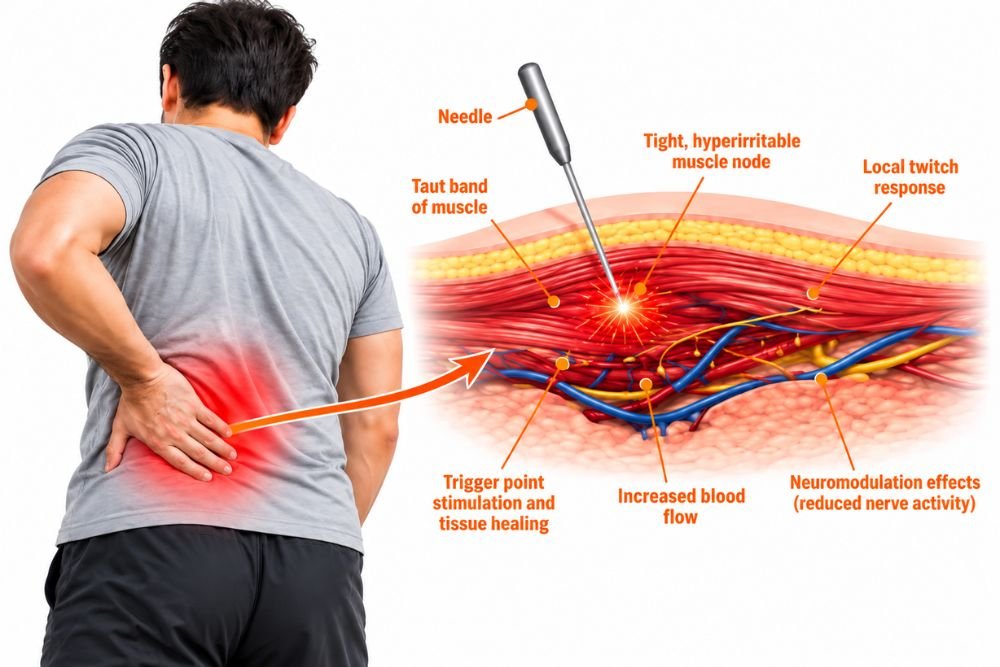
Recurring muscle knots can be frustrating, particularly when the same area of muscle pain or tightness keeps returning despite stretching, massage, or rest. If you are dealing with persistent muscle tension, you may have come across dry needling as a possible treatment.
So, can dry needling help with muscle knots? Dry needling may help reduce pain, muscle sensitivity, and tension associated with certain muscular trigger points. However, it is not a guaranteed permanent solution and works best when combined with an appropriate physiotherapy treatment plan.
What Are Muscle Knots, and Why Do They Keep Coming Back?
“Muscle knot” is a common term used to describe an area of painful or tight muscle. In some cases, this may be associated with myofascial trigger points, which can cause local tenderness and sometimes pain that spreads to another area.
Muscle tension can develop for several reasons, including repetitive movements, increased training loads, prolonged sitting, changes in activity, stress, or inadequate recovery. For example, spending long periods at a desk or suddenly increasing your exercise routine may place additional demands on certain muscles.
If muscle knots keep returning, simply treating the painful area may not address the reason they developed in the first place. This is where a physiotherapy assessment can be useful.
Can Dry Needling Help Relieve Muscle Knots?
Dry needling may help relieve muscle pain and tension in some people, particularly when muscular trigger points are contributing to their symptoms.
Dry needling is a physiotherapy treatment that uses a fine, sterile needle to target specific areas of muscle or surrounding tissue. A trained physiotherapist may use the technique as part of a broader treatment program based on your symptoms and physical assessment.
It is important to understand that dry needling does not simply “remove” a muscle knot. Its effects are more complex and may include changes in pain sensitivity and muscle response.
For recurring muscle knots, dry needling is generally most useful when it forms part of an individualised plan rather than being used as a standalone treatment.
How Does Dry Needling Work for Muscle Pain and Tension?
During a dry needling treatment, your physiotherapist first assesses your symptoms and movement to determine whether the technique is appropriate. If it is, a fine needle is inserted into a selected area of muscle.
What Happens During Dry Needling?
You may feel a brief prick as the needle enters the skin. Depending on the area being treated, you may also experience pressure or a short muscle twitch.
Your physiotherapist will monitor your response throughout the treatment and can reassess your movement, pain or muscle sensitivity afterwards.
Why Might It Reduce Pain?
Dry needling may influence pain sensitivity and the way the nervous system responds to stimulation in the treated area. The exact effects can vary between individuals, which is why assessment and clinical judgement are important.
When Might Dry Needling Be Helpful for Recurring Muscle Knots?
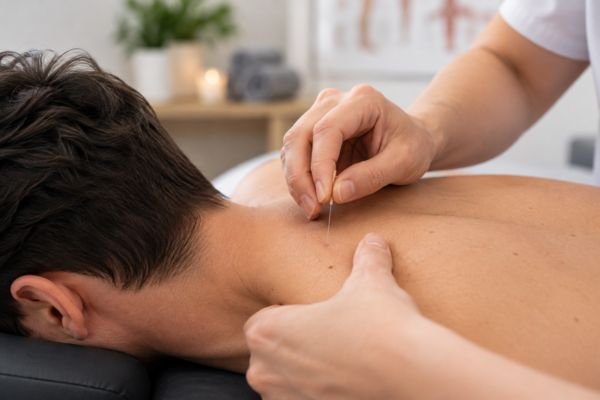
Dry needling may be considered when you have persistent muscle tightness, localised muscular pain, or symptoms associated with trigger points that are affecting your movement or activity.
However, recurring muscle tension often has more than one contributing factor. Your physiotherapist may therefore combine dry needling physiotherapy with exercise, mobility work, education, and appropriate load management.
At Go Run Go Physio, treatment can be tailored to your individual presentation rather than relying on a single technique. The aim is not only to manage your current muscle pain but also to understand factors that may be contributing to recurring symptoms.
Dry Needling Alone May Not Stop Muscle Knots From Returning
One of the most important things to understand about muscle knots is that temporary pain relief does not necessarily address why the problem keeps occurring.
Your symptoms may be influenced by your exercise routine, workload, strength, movement habits, recovery, sleep or the amount of time you spend in a particular position.
This is why physiotherapy for muscle pain may involve more than hands-on treatment. Depending on your assessment, your physiotherapist may recommend specific strengthening or mobility exercises, changes to training load and strategies to gradually improve your tolerance to activity.
Is Dry Needling Safe?
When performed by an appropriately trained physiotherapist using suitable hygiene and safety procedures, dry needling is generally considered a safe treatment for appropriate patients.
Some people experience temporary soreness, bruising or minor bleeding around the treatment area. These effects usually settle relatively quickly. More serious complications are uncommon but can occur, depending on the treatment area and individual circumstances.
Tell your physiotherapist about relevant medical conditions, medications and any concerns before treatment. A proper assessment helps determine whether dry needling is suitable for you.
Does Dry Needling Hurt?
Dry needling can cause a brief prick or uncomfortable sensation, but the experience varies from person to person. Some people notice a short muscle twitch or ache during treatment, while others find the procedure relatively comfortable.
Your physiotherapist should explain what to expect and monitor your response throughout the session. If you are particularly sensitive to needles or concerned about discomfort, discuss this before treatment.
When Should You See a Physiotherapist for Recurring Muscle Knots?
If muscle knots and tension keep returning, become more painful or start interfering with exercise, work, sleep or everyday activities, it may be worth having the problem properly assessed.
A physiotherapist can help determine whether your symptoms are primarily muscular or whether another issue may be contributing to your pain. They can then develop a treatment plan suited to your goals and activity levels.
If you are considering dry needling for muscle knots, the team at Go Run Go Physio can assess your symptoms and discuss whether dry needling and other physiotherapy treatments are appropriate for your situation. The goal is to help you manage your current symptoms while addressing the factors that may be contributing to recurring muscle pain and tension. Get in touch with Go Run Go Physio today to book your dry needling physiotherapy session.
Frequently Asked Questions
Q1. Can dry needling get rid of muscle knots permanently?
Answer: Not necessarily. Dry needling may help reduce pain and muscle sensitivity, but recurring muscle knots can return if contributing factors such as training load, strength, movement habits or recovery are not addressed.
Q2. How many dry needling sessions do I need?
Answer: There is no standard number of sessions. The appropriate frequency depends on your symptoms, assessment findings, and how you respond to treatment. Dry needling may be used alongside other physiotherapy strategies rather than as the only treatment.
Q3. What should I do after dry needling?
Answer: Follow the advice provided by your physiotherapist. Depending on your treatment and symptoms, you may be able to continue normal movement and prescribed exercises. Some temporary soreness can occur, so avoid significantly increasing your physical load if the treated area is uncomfortable.
Q4. Is dry needling better than massage for muscle knots?
Answer: Neither treatment is universally better. The appropriate approach depends on what is causing your symptoms. A physiotherapist may recommend dry needling, massage or manual therapy, exercise, or a combination of approaches following an assessment.