 +61 401 458 166
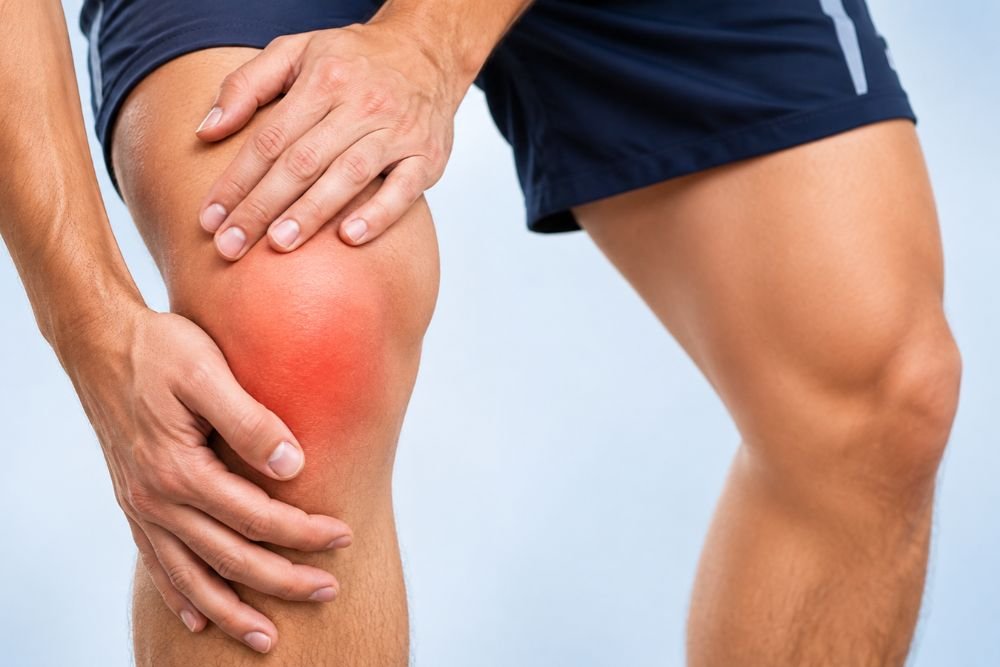
Have you ever experienced pain at the front of your knee when climbing stairs, running, squatting, or getting up from a chair? You may be experiencing patellofemoral pain syndrome (PFPS), commonly known as runner’s knee. This condition causes pain around or behind the kneecap and can make everyday activities uncomfortable.
Although it is often associated with running, patellofemoral pain can affect anyone, including people who exercise regularly and those who spend long periods sitting. Understanding its symptoms, causes, and treatment options can help you manage knee discomfort and return to your usual activities with greater confidence.
Understanding Patellofemoral Pain Syndrome and How It Affects Your Knee
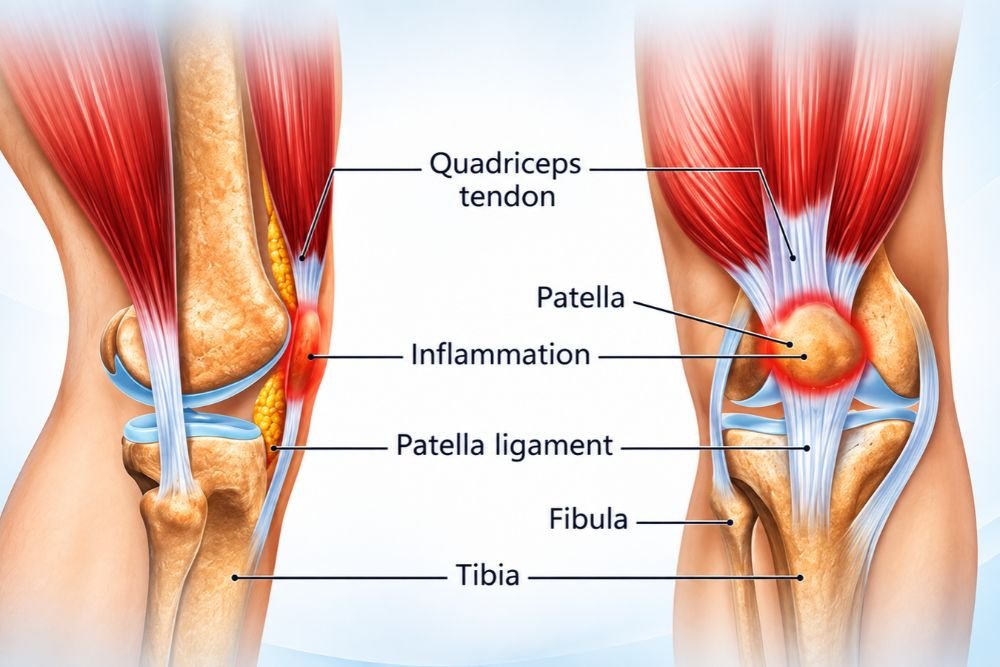
Patellofemoral pain syndrome is a condition characterised by pain around or behind the kneecap (patella), where it meets the thigh bone (femur). This area is known as the patellofemoral joint.
The condition commonly develops when activities place repeated or increased stress on the knee joint. Movements involving knee bending, such as running, jumping, squatting, and climbing stairs, can aggravate symptoms.
Although it is often called runner’s knee, you do not have to be a runner to develop this condition. It can affect people with different activity levels and fitness backgrounds.
Common Symptoms of Patellofemoral Pain Syndrome
The symptoms of patellofemoral pain syndrome can vary depending on the individual and their activity levels. However, the most common symptom is a dull, aching pain around or behind the kneecap.
You may notice discomfort during activities such as climbing or descending stairs, running, squatting, lunging, or kneeling. Some people also experience knee pain after sitting for extended periods with their knees bent, sometimes referred to as ‘the theatre sign.’
Other symptoms may include clicking or grinding sensations when bending the knee. These sensations do not necessarily indicate serious joint damage, particularly when they occur without pain.
What Causes Patellofemoral Pain Syndrome? Risk Factors to Know
Patellofemoral pain syndrome does not usually have one single cause. It often develops due to a combination of physical, training-related, and movement factors that increase stress on the knee joint.
Some common contributing factors include:
- Sudden changes in physical activity: Increasing running distance, workout intensity, or training frequency too quickly can overload the knee.
- Reduced muscle strength: Limited strength or capacity in the quadriceps and hip muscles may affect how the lower limb manages physical demands.
- Repetitive knee loading: Activities involving frequent running, jumping, and squatting can contribute to symptoms.
- Previous knee injuries: A history of knee problems may influence movement and exercise tolerance.
- Changes in training routines: Switching exercise surfaces, footwear, or workout styles may increase physical demands if introduced too quickly.
Understanding these risk factors can help identify activities that may be contributing to your knee pain.
5 Physiotherapist-Recommended Exercises for Patellofemoral Pain Syndrome
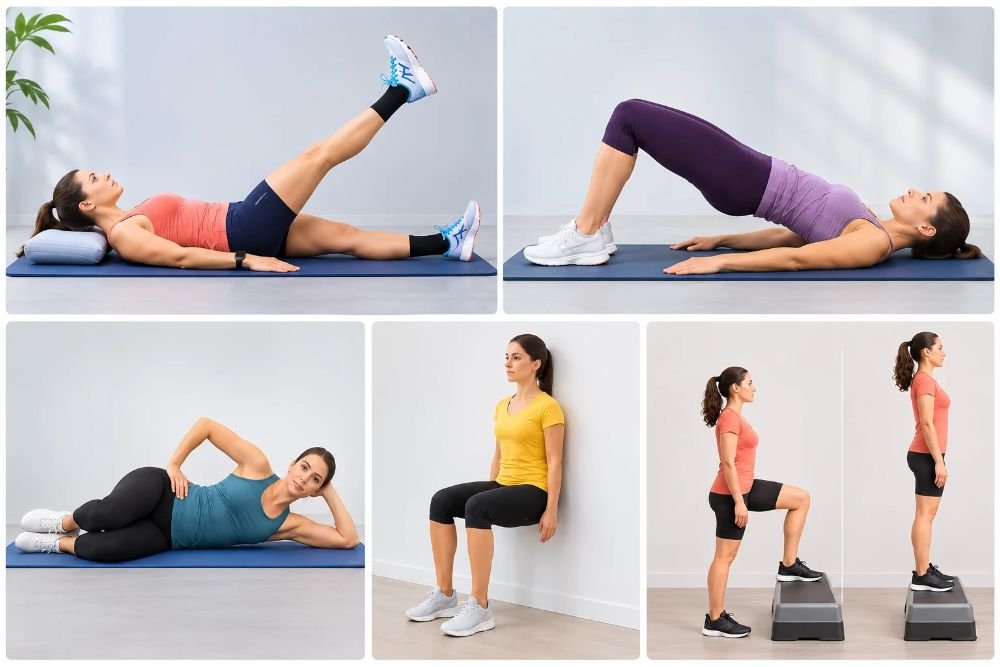
Exercise-based rehabilitation is an important part of managing patellofemoral pain syndrome. A suitable program often focuses on improving quadriceps and hip strength while gradually increasing the knee’s ability to tolerate everyday activities.
Here are five exercises that may be included in a knee rehabilitation program.
1. Straight Leg Raises
Lie on your back with one knee bent and the other leg straight. Tighten the thigh muscles of your straight leg and slowly lift it to approximately the height of your opposite knee. Lower it gradually without allowing your leg to drop suddenly.
This exercise helps strengthen the quadriceps while keeping the knee relatively straight.
2. Glute Bridges
Lie on your back with both knees bent and feet flat on the floor. Tighten your abdominal muscles and squeeze your glutes as you lift your hips. Hold briefly before slowly lowering them.
Glute bridges help strengthen the gluteal muscles, which contribute to hip stability and lower-limb movement.
3. Clamshell Exercises
Lie on your side with your knees slightly bent and feet together. Keeping your feet touching, slowly lift your upper knee without rotating your pelvis. Lower it in a controlled manner.
This exercise targets the hip muscles, particularly the hip abductors and external rotators.
4. Wall Sits
Stand with your back against a wall and slowly slide down into a comfortable squat position. Hold briefly before returning to standing.
Wall sits help develop quadriceps strength and improve the knee’s tolerance to controlled loading.
5. Step-Ups
Stand in front of a low step. Place one foot firmly on the step and push through it to lift your body upwards. Slowly step back down and repeat on the other side.
Step-ups help develop functional leg strength for everyday movements such as climbing stairs.
Important: These exercises may not be suitable for everyone. The appropriate exercises, repetitions, and progression depend on your symptoms and physical capacity. Stop if an exercise causes significant pain and consult a physiotherapist for an individualised program.
How Can Physiotherapy Help Treat Patellofemoral Pain Syndrome?
Physiotherapy can play an important role in managing patellofemoral pain syndrome by addressing contributing factors and improving the knee’s ability to tolerate physical activity.
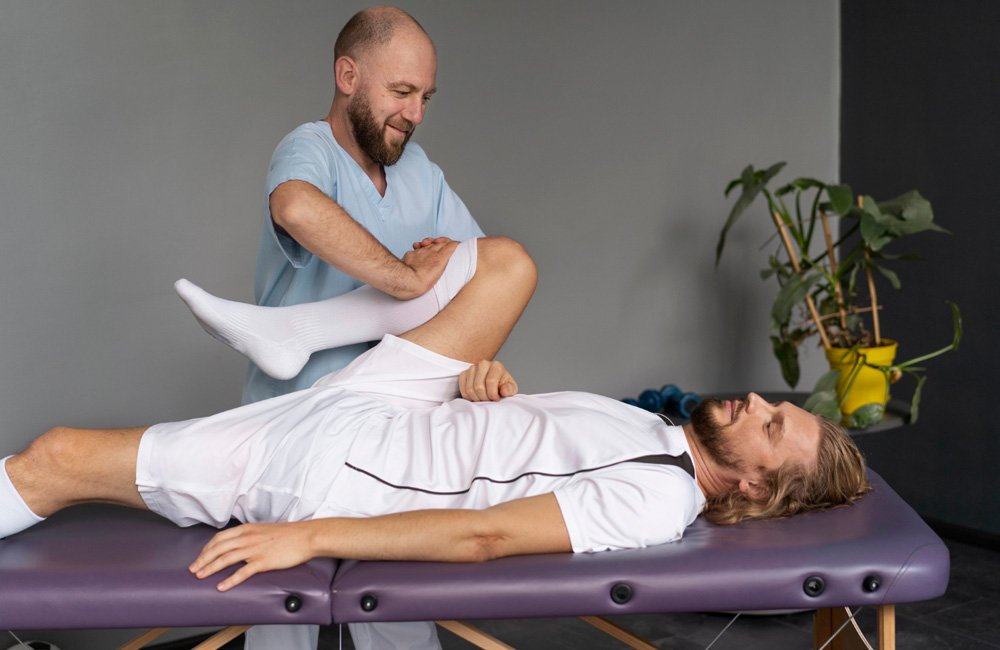
A physiotherapist may assess your knee movement, quadriceps strength, hip strength, flexibility, and activity history to understand what could be contributing to your symptoms.
Based on the assessment, treatment may include targeted strengthening exercises, movement retraining, activity modification, and gradual return-to-running guidance. The aim is to improve strength, movement control, and functional capacity rather than simply reduce pain temporarily.
Go Run Go Physio provides physiotherapy services, including convenient home physiotherapy visits, for individuals experiencing knee pain and other musculoskeletal conditions. Our services are available in Clayton, Dandenong, Oakleigh South and Springvale, making it easier to access physiotherapy support closer to home.
When Should You See a Physiotherapist for Front-of-Knee Pain?
Consider seeing a physiotherapist if your knee pain persists, keeps returning, or affects your ability to exercise, run, or perform everyday activities.
An assessment can help identify the possible cause of your discomfort and determine an appropriate treatment plan.
If your knee becomes suddenly swollen, locks, or you cannot put weight on it following an injury, seek prompt medical assessment. A hot, red knee accompanied by fever also requires urgent medical attention.
Take the First Step Towards Managing Your Knee Pain
Persistent knee pain can affect your ability to run, exercise and enjoy everyday activities. Getting the right assessment and following an appropriate rehabilitation program can help you work towards better knee strength, mobility and function.
If you are experiencing symptoms of patellofemoral pain syndrome, Go Run Go Physio can help you explore suitable physiotherapy options, including home visits in Clayton, Dandenong, Oakleigh South and Springvale. Get in touch with our team to discuss your knee pain and take the next step towards recovery.
Frequently Asked Questions
Q1. Can patellofemoral pain syndrome go away on its own?
Answer: Yes, mild symptoms may improve with appropriate activity modification and gradual strengthening. However, persistent pain may require a structured rehabilitation program to address contributing factors and improve knee function.
Q2. Is walking good for patellofemoral pain syndrome?
Answer: Walking is generally suitable if it does not significantly aggravate your symptoms. Start with a comfortable distance and gradually increase your activity according to how your knee responds.
Q3. Is patellofemoral pain syndrome the same as runner’s knee?
Answer: Yes, runner’s knee is a commonly used term for patellofemoral pain syndrome. It describes pain around or behind the kneecap, often associated with repetitive activities such as running, squatting and climbing stairs.
Q4. Should I stop running if I have patellofemoral pain syndrome?
Answer: Not necessarily. You may need to temporarily reduce your running distance, speed or frequency. A gradual return-to-running program, guided by your symptoms and rehabilitation progress, can help you resume running safely.
Q5. How long does patellofemoral pain syndrome take to heal?
Answer: Recovery varies depending on symptom severity, contributing factors and rehabilitation consistency. Some people improve within several weeks, while others may require a few months of progressive rehabilitation.
Q6. Can physiotherapy help with runner’s knee?
Answer: Yes. Physiotherapy can help manage runner’s knee through individualised strengthening exercises, activity modification, load management, and guidance on returning to running and other physical activities.